Foreign Influence Operations Seize on Growing American Friction Over AI Data Center Expansion
A covert foreign influence campaign revealed by social media network X has highlighted a strategic shift in digital disinformation: foreign operatives are increasingly weaponizing real-world economic and environmental anxieties to stoke domestic political conflict. According to an announcement from X’s Global Government Affairs team, platform safety teams uncovered a network of approximately 200,000 accounts linked to operators in China. While the vast majority of the network focused on broader geopolitical issues, a distinct subset of roughly 200 accounts was deployed to influence American public opinion regarding the rapid construction of artificial intelligence data centers.
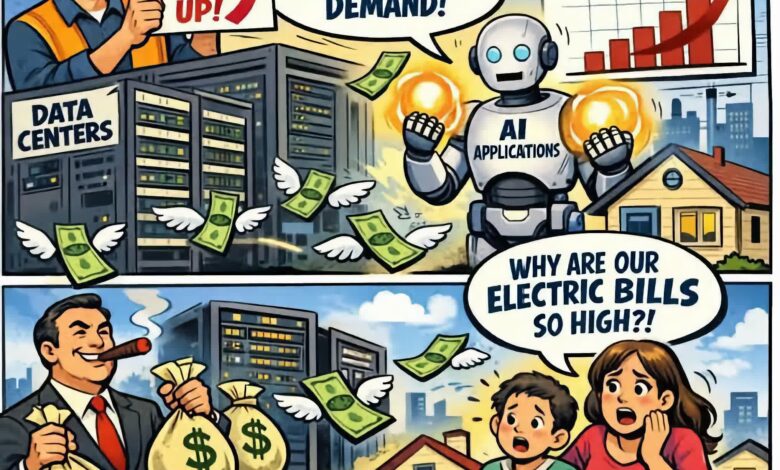
The campaign sought to manipulate an active and sensitive public debate surrounding US technology policy, regional energy grids, and utility pricing. Operatives generated posts claiming that the massive power demands of AI facilities were driving up electricity costs for average consumers while overwhelming public infrastructure. To amplify these messages, the accounts circulated AI-generated cartoons portraying data center developers benefiting financially at the expense of local communities. The revelation illustrates how modern state-backed propaganda efforts rely less on fabricating entirely new controversies and more on amplifying pre-existing, deeply felt domestic grievances.
Inside the Mechanics of the Influence Campaign
The findings published by X build upon earlier disclosures from other artificial intelligence and cybersecurity monitoring bodies. In June, OpenAI reported that China-based users had attempted to utilize ChatGPT to develop targeted messaging strategies designed to sway American sentiment against data center expansion. At least two visual assets identified in X’s enforcement action matched examples previously highlighted by OpenAI, indicating a coordinated effort to test and deploy AI-assisted influence tactics across multiple digital platforms.
While the 200 accounts targeted data centers directly, the remaining balance of the nearly 200,000-account network appears to have engaged in broader propaganda efforts. According to earlier analysis, these wider networks primarily focused on undermining confidence in US trade policies, criticizing technological tariffs, and promoting messaging critical of American foreign strategy. However, the decision to dedicate a dedicated cluster of accounts to AI infrastructure underscores how vital energy policy and technological supremacy have become in global power dynamics.
By framing data center construction as a direct threat to household budgets, the campaign attempted to transform a technical policy debate into a personal economic issue. Yet, analysts note that the narrative succeeded in gaining traction primarily because it mirrored actual economic conditions developing in communities hosting these facilities.
Propaganda vs. Reality: The Power and Cost Crunch
The strategic challenge presented by this influence campaign lies in the fact that its core premise—that data centers place extraordinary demands on utility systems and elevate costs—is grounded in empirical reality. Rather than inventing a false narrative from whole cloth, the operative network exploited authentic market pressures that have been independently documented by financial institutions and news organizations.
A financial analysis from Goldman Sachs revealed that residential electricity prices across the United States had risen by 6.9 percent year-over-year as of February 2026, driven in part by accelerating power demand from computing infrastructure. The investment bank projected that utility bills would continue to face upward pressure as dozens of massive computing facilities come online. In localized regional markets where data centers are heavily concentrated, the impact has been even more pronounced. Reporting by Bloomberg showed that wholesale electricity prices in specific areas surrounding major data center hubs experienced surges of up to 267 percent, reflecting intense competition for available grid capacity.
These financial figures highlight a growing operational dilemma for utility companies and state regulators: balancing the immense power requirements of advanced technology clusters with the mandate to deliver reliable, affordable electricity to residential consumers.
Resource Intensity and Local Community Resistance
Beyond utility rates, the physical presence of hyperscale data centers has created tangible friction in local communities across the United States. Modern AI training centers require unprecedented volumes of electrical power and cooling resources, often competing with agricultural and residential needs.
In Michigan, plans for a single mega-campus involve an estimated power draw of 1.4 gigawatts—an energy footprint roughly equivalent to the total generating capacity of a commercial nuclear power plant. Local residents and environmental advocacy groups have raised objections not only to the power demands of the facility but also to secondary impacts, including traffic congestion, industrial light pollution, and the conversion of prime agricultural land into high-security industrial parks.
Water consumption presents an equally acute point of conflict, particularly as advanced microchips generate immense thermal output requiring specialized cooling systems:
- Virginia Hubs: In Virginia, long recognized as the world’s largest concentration of data facilities, water usage by computing operations surged from 1.13 billion gallons in 2019 to at least 1.85 billion gallons in 2023.
- Georgia Developments: A large-scale facility in Georgia reportedly consumed 29 million gallons of municipal water during its initial testing and commissioning phase alone, drawing public outcry from neighboring residents who experienced sudden drops in municipal water pressure before the facility was fully operational.
- Secondary Emissions: When regional power grids cannot meet baseline electricity demands, data center operators frequently deploy large banks of backup diesel generators or install dedicated natural gas turbines, leading to localized noise complaints and raised air pollution concerns.
The Political Divide Over Strategic Infrastructure
The growing domestic pushback against data center developments has elevated the issue into a broader political debate over economic competitiveness and national security. Proponents of rapid AI infrastructure development argue that domestic computing capacity is essential to maintaining American technological leadership, warning that delays in construction could yield critical advantages to foreign adversaries.
This perspective has found vocal support among political commentators and public officials. Media commentators have drawn parallels between opposing data centers and historical opposition to defense manufacturing during wartime, framing energy grid expansion as a vital component of national security strategy. Similarly, President Donald Trump publicly cautioned against blocking facility construction, arguing that opponents of data center expansion are making a significant strategic mistake that threatens long-term economic growth.
This political framing creates a sharp contrast between national macro-strategic goals and local micro-economic realities. While federal policymakers view computational capacity through the lens of international competition, local city councils, farmers, and homeowners evaluate the projects based on immediate considerations such as local water security, utility bills, and neighborhood zoning.
The Intersection of Domestic Friction and Foreign Disinformation
The discovery of the 200,000-account network highlights a persistent vulnerability in modern open societies: foreign influence campaigns are most potent when they exploit authentic domestic vulnerabilities. The Chinese operators targeting American AI infrastructure did not create the underlying friction surrounding electricity prices, water rights, or grid capacity. Instead, they recognized that the rapid expansion of technology facilities had generated legitimate consumer frustration and sought to weaponize that frustration to slow infrastructure deployment.
As the race for artificial intelligence capability accelerates, the tension between regional resource limits and global technological competition is likely to intensify. Identifying and dismantling foreign bot farms remains a vital priority for platform integrity and national security. However, addressing the root causes of public opposition will ultimately require solving the complex physical challenges of energy generation, water stewardship, and equitable utility pricing.