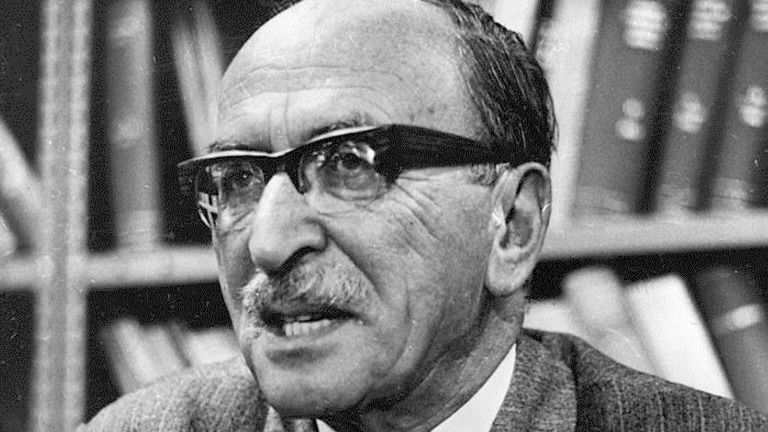
Dennis Gabor and the Philosophy of Inventing the Future: How a Nobel Laureate’s Vision Shaped Modern Technology
When Dennis Gabor was awarded the Nobel Prize in Physics in 1971 for his invention of holography, the world celebrated a breakthrough in optical physics. The Hungarian-British scientist had conceived a methodology capable of recording and reconstructing three-dimensional images long before the underlying laser technology existed to make it practical. Yet, while holography remains a cornerstone of modern optics, Gabor’s enduring impact on contemporary thought extends far beyond the physical sciences. His most profound contribution to modern technology may well be his philosophical framework regarding how humanity interacts with time, innovation, and progress.
Writing in his rare 1963 volume, Inventing the Future, Gabor articulated a perspective that fundamentally challenged traditional modes of forecasting. Rather than viewing the future as a predetermined destination to be calculated through statistical extrapolation, he framed it as an unwritten domain waiting to be actively constructed. His foundational principle—that the future cannot be predicted, but futures can be invented—shifted the paradigm from passive anticipation to intentional creation, leaving an indelible imprint on the pioneers who built the modern digital landscape.
Expanding the Probability Space: The Nature of Invention
To understand Gabor’s philosophy, one must examine his perspective on human agency across historical epochs. In his 1963 writings, Gabor observed that before the Industrial Revolution, the realm of human capability was severely constrained. Traditional societies operated within narrow technical boundaries, meaning that the scope of what could potentially happen—what he termed the “probability space”—remained static for centuries.
The acceleration of scientific inquiry and industrial engineering dramatically broke that cycle. Gabor noted that each successive wave of technological and social innovation continuously widens this probability space, creating an unprecedented spectrum of outcomes that can serve human flourishing or bring systemic risk. In his view, human society itself is not an accidental byproduct of biological evolution, but a direct consequence of man’s unique capacity to invent.
Crucially, Gabor drew a sharp distinction between formal logic and the mental mechanics of innovation. He maintained that while inventive thought is thoroughly rational, it is fundamentally non-deductive. Pure deductive logic can only derive conclusions from pre-existing premises; it cannot generate entirely new concepts out of nothing. Invention, therefore, requires a cognitive leap that transcends standard analytical procedures. It demands that an innovator project a vision into the blank canvas of possibility and subsequently engineer the rational steps needed to bring that vision into reality.
From Theoretical Physics to Personal Computing
The practical significance of Gabor’s philosophy became clear when it was embraced by the technology sector during the birth of modern computing. Among the most prominent figures to absorb Gabor’s worldview was Alan Kay, a visionary computer scientist whose career included transformative roles at major institutions, including Apple and Hewlett-Packard.
Starting in 1971—the same year Gabor received his Nobel Prize—Kay adopted Gabor’s core thesis as a guiding operational maxim. For Kay and his contemporaries, the challenge was not to ask what computers might look like in twenty years by analyzing current market trends. Instead, the objective was to determine what computing should look like and then design the requisite technologies to realize that outcome.
This mindset directly catalyzed some of the most iconic advancements in personal technology. Concepts that are now ubiquitous, such as the graphical user interface (GUI) and portable laptop computing, were conceived decades before the hardware was cheap or powerful enough to support widespread consumer adoption. By refusing to accept the limits of contemporary hardware, pioneers influenced by Gabor’s philosophy systematically forced technology to catch up with human imagination.
The Fallibility of Prediction and the Economics of Scale
Despite his brilliant understanding of the inventive process, Gabor’s legacy also offers an instructive lesson on the pitfalls of technological forecasting. The paradox of Gabor’s career is that while he argued against the possibility of predicting the future, he occasionally attempted to do so himself—with mixed results.
In 1962, a year before publishing Inventing the Future, Gabor evaluated the concept of transmitting physical documents across telephone wires, a technology that would later manifest as the facsimile machine and digital data networking. Gabor correctly recognized that such transmission was theoretically possible under the laws of physics. However, he dismissed its practical viability, asserting that the necessary equipment would remain far too expensive to ever achieve widespread adoption.
Gabor’s miscalculation highlights a persistent challenge in technological analysis: the difficulty of anticipating industrial scale and cost reduction curves. While an inventor may understand physical principles perfectly, predicting how manufacturing processes, component miniaturization, and commercial competition will alter unit economics is notoriously complex. Gabor saw the physical possibility but underestimated the speed at which industrial supply chains would lower economic barriers, demonstrating why invention and market forecasting are entirely different disciplines.
The Enduring Relevance of Intentional Innovation
Dennis Gabor’s core message remains deeply relevant in an era dominated by rapid advancements in automation, artificial intelligence, and global networks. His writings serve as a critical reminder that technological trajectories are not inevitable forces of nature to which society must passively adapt.
When organizations focus exclusively on trend prediction, they run the risk of becoming passive observers of change, aligning their strategies to assumptions that may be rendered obsolete by unexpected disruptions. Conversely, adopting an inventive mindset encourages researchers, engineers, and policymakers to take active responsibility for the systems they build.
The broader implication of Gabor’s philosophy is both empowering and demanding. By framing innovation as a non-deductive, creative enterprise, Gabor placed accountability directly on human decision-makers. Technology does not possess its own momentum; it reflects the deliberate choices, priorities, and values of those who design it. As the probability space of human capability continues to expand at an unprecedented rate, Gabor’s 1963 insight remains an enduring truth: the most effective way to understand where society is headed is to actively build the future ourselves.