Volkswagen Launches Presales for ID. Aura T6 in China, Highlighting a Growing Price Gap in the Global EV Market
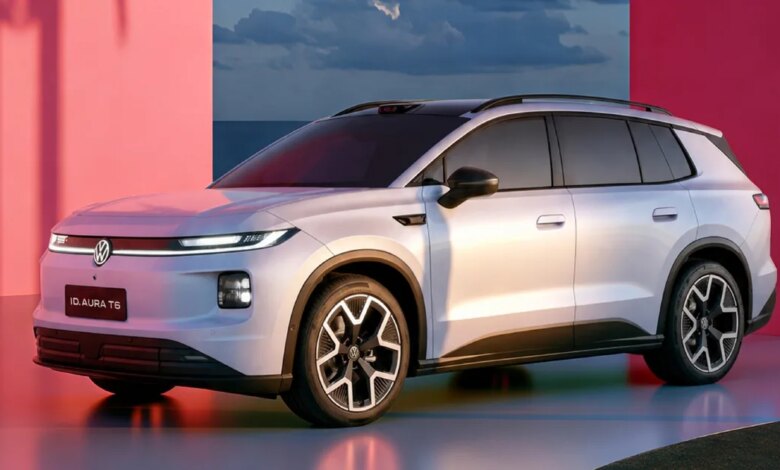
Volkswagen has officially opened presales in China for its latest electric crossover, the ID. Aura T6, entering one of the world’s most aggressive automotive markets with a starting price that stands in sharp contrast to Western electric vehicle pricing. Manufactured under the FAW-Volkswagen joint venture, the new five-seat crossover carries an entry-level presale price of 135,900 yuan, which converts to approximately $20,225. Across its full lineup, pricing reaches up to roughly $25,285 for higher-tier variants equipped with advanced driver-assistance hardware.
The positioning of the ID. Aura T6 underscores a expanding divide between electric vehicle pricing structures in China and those in North America. Rather than offering a stripped-down urban commuter, Volkswagen is delivering a midsize crossover equipped with modern digital architecture, competitive motor output, and substantial battery capacity. The launch emphasizes how localized engineering partnerships and domestic supply chains are allowing global automakers to achieve price points in China that remain out of reach in Western markets.
Architecture, Battery Options, and Performance Specs
The engineering foundation of the ID. Aura T6 relies on Volkswagen’s China Electrical Architecture (CEA), a platform co-developed alongside Chinese electric vehicle manufacturer Xpeng. This collaborative architecture was designed specifically to accelerate development cycles, optimize production costs, and integrate localized software and hardware solutions tailored to market demands.
Underneath the bodywork, the vehicle utilizes a rear-mounted single electric motor delivering 228 horsepower. According to manufacturer figures, this powertrain propels the crossover from 0 to 100 km/h (0 to 62 mph) in as fast as 7.2 seconds. Energy delivery is handled by two distinct battery configurations depending on the selected trim level:
- Standard Trim: Employs a 59.9-kWh Lithium Iron Phosphate (LFP) battery pack, providing a cost-effective energy storage solution with proven thermal stability.
- Extended Range Trim: Upgrades to a larger 77.5-kWh battery pack, boosting claimed total range up to 660 kilometers (approximately 410 miles) under China’s CLTC (China Light-Duty Vehicle Test Cycle) assessment protocol.
The choice of LFP chemistry for the entry model highlights a key cost-reduction strategy. LFP cells avoid expensive materials like cobalt and nickel, lowering manufacturing expenses while supporting frequent high-state-of-charge cycles suitable for daily driving routines.
Interior Technology and Driver-Assistance Hardware
Inside the cabin, the ID. Aura T6 reflects the screen-centric layout currently dominating consumer preferences in China. The dashboard is anchored by a 15.6-inch floating central touchscreen, complemented by a 10.25-inch digital driver instrument display. To minimize driver distraction, Volkswagen has integrated a 25.8-inch augmented-reality head-up display (AR-HUD) that projects navigation prompts and vehicle telemetry directly into the driver’s field of view.
Infotainment software support includes native connectivity protocols such as Apple CarPlay, HiCar, and Carlink, ensuring broad compatibility with local smartphone ecosystems. Beyond cabin entertainment, higher-tier configurations incorporate an advanced driver-assistance system (ADAS) suite. These upper trims integrate top-mounted LiDAR hardware alongside compute processors developed by Horizon Robotics, enabling enhanced perception and automated driving capabilities in complex driving environments.
From a practical standpoint, the midsize crossover offers seating for five passengers and provides functional cargo utility. When the rear seats are folded flat, total available cargo capacity expands to 1,796 liters, positioning the vehicle as a practical option for families requiring interior flexibility.
Comparative Analysis: China Presale Pricing vs. US Entry-Level EVs
The practical significance of the ID. Aura T6’s $20,225 entry price becomes evident when compared against the current and upcoming entry-level electric vehicle offerings in the United States. In North America, affordable EV options remain sparse, with entry thresholds residing significantly higher even for smaller vehicle classes.
For context, the 2026 Nissan Leaf carries a starting price of $29,990 and offers up to an EPA-estimated range of 303 miles. Similarly, Chevrolet’s announced 2027 Bolt is targeted to start at $28,995, offering an EPA-estimated range of 262 miles. The base price of the ID. Aura T6 sits nearly $9,000 below these American market benchmarks despite occupying a comparable or larger vehicle segment.
| Vehicle Model | Target Market | Starting Price (USD Equivalent) | Claimed Range |
|---|---|---|---|
| Volkswagen ID. Aura T6 (Base) | China | $20,225 | Up to 660 km (CLTC) |
| Volkswagen ID. Aura T6 (Top Trim) | China | $25,285 | Up to 660 km (CLTC) |
| Chevrolet Bolt (2027) | United States | $28,995 | Up to 262 miles (EPA) |
| Nissan Leaf (2026) | United States | $29,990 | Up to 303 miles (EPA) |
It is crucial to recognize that direct currency conversions between regional automotive markets do not present an equivalent comparison. Testing standards also differ significantly; China’s CLTC cycle routinely produces higher range numbers than the United States EPA testing procedure. Nevertheless, the physical hardware offered on the Aura T6 for roughly $20,000 highlights how far domestic cost optimization has progressed in China.
Structural Factors Behind the Pricing Disparity
Several underlying industrial dynamics explain why Volkswagen can market a well-equipped electric midsize SUV in China at a price point that appears unfeasible in Western markets. The divergence is driven primarily by supply chain integration, regional competition, and localized manufacturing costs.
China hosts the world’s most concentrated supply chain for electric vehicle components, particularly battery cell production, raw material processing, and power electronics. Local sourcing eliminates long-distance logistics overhead and reduces tariff exposure. Furthermore, Volkswagen’s joint venture structure with FAW and its engineering alliance with Xpeng allow for shared research and development costs tailored directly to high-volume domestic production.
Domestic market pressure also forces aggressive retail pricing. Chinese automakers and foreign joint ventures are engaged in intense price competition, forcing companies to compress operating margins to retain market share. Lower labor expenses and streamlined local supplier networks further suppress baseline vehicle assembly costs.
Conversely, bringing a vehicle like the ID. Aura T6 to North America would introduce substantial regulatory and economic barriers. Importing Chinese-built electric vehicles into the US involves significant tariff penalties designed to protect domestic manufacturing. Additionally, certifying a foreign-market platform for North America requires costly modifications to satisfy federal motor vehicle safety standards, crash testing requirements, and localized software integration. Volkswagen has announced no plans to introduce the ID. Aura T6 to the United States market.
Strategic Implications for Global Automakers
The release of the ID. Aura T6 highlights a strategic dilemma facing global manufacturers like Volkswagen. To remain competitive in China, legacy brands must adapt to fast-paced local design cycles, leverage local technical partnerships, and accept lower pricing structures. However, applying these cost efficiencies to Western product portfolios remains constrained by trade policy, regional manufacturing costs, and supply chain barriers.
For consumers in North America and Europe, developments like the ID. Aura T6 serve as a benchmark for what modern battery technology and scaled manufacturing can deliver at lower price points. As Chinese domestic platforms continue to advance in software integration and hardware specifications while maintaining entry pricing around $20,000, global automakers will face persistent pressure to bridge the affordability gap in their home markets.